
How Our Garage Door Repair Process Works
A garage door problem can be frustrating, especially when you do not know what failed or what the repair will cost. Our process is designed to make the situation simple. We listen to what happened, inspect the complete system, explain the problem, provide a clear estimate, complete the repair, and test the door before we leave.
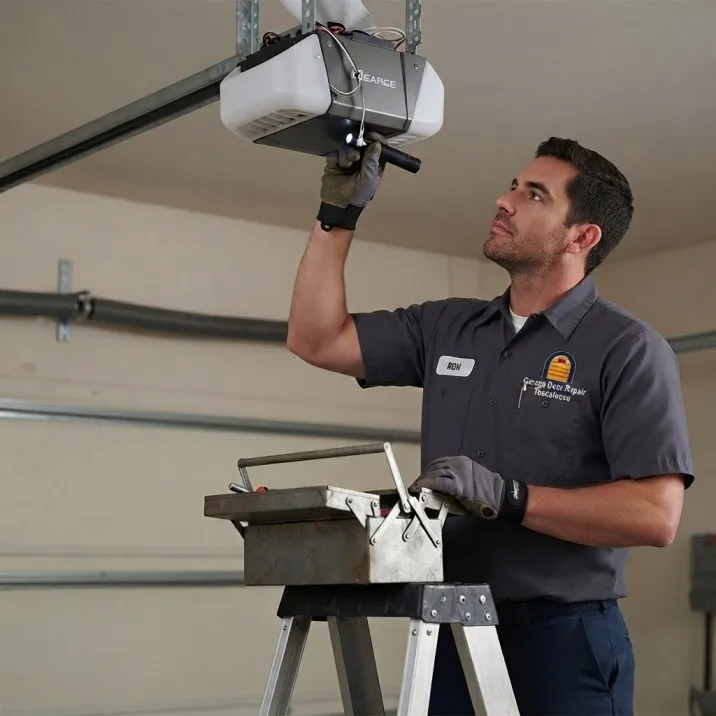
We inspect the actual problem before recommending a repair.
You Should Know What Is Wrong Before You Pay for the Repair
Garage doors have several parts working together. Springs carry the door’s weight, cables transfer lifting force, rollers guide the door, tracks keep it moving in the right path, and the opener controls automatic movement.
When one part fails, the symptom you see is not always the part that needs repair. A door that will not open may have a broken spring, damaged cable, failed opener, or another mechanical problem.
That is why our process starts with the actual problem instead of assuming what failed.
Our Garage Door Repair Process
From your first call to the final test, every step has a purpose. The goal is simple: understand the problem, explain your options, complete the right repair, and leave you with a properly working door.
Tell Us What Happened
Stuck, noisy, off track, won’t open, won’t close — whatever it’s doing, that’s where we start.
Tell us what you noticed, when the problem started, and whether the door is currently open, closed, or stuck somewhere in between. These details help us understand what may be happening before we arrive.
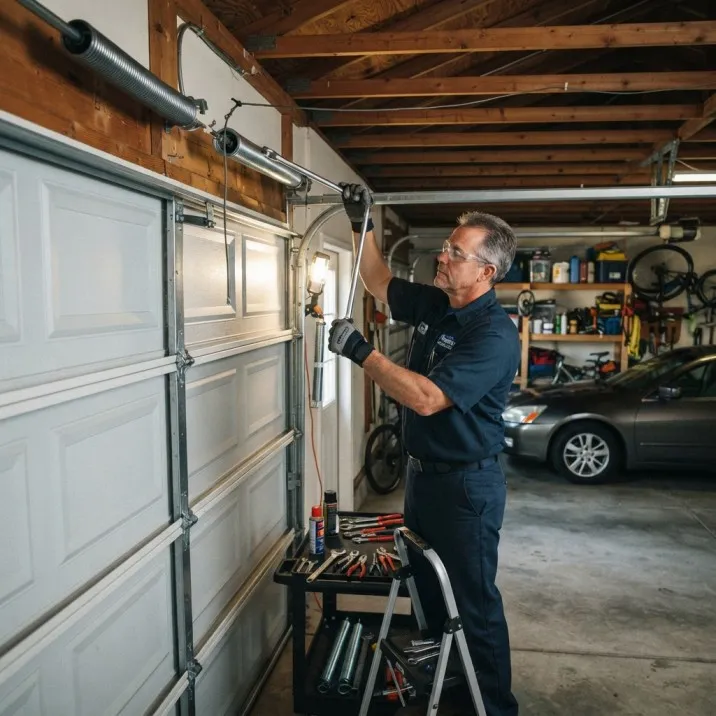
We Inspect the System
Springs, cables, rollers, tracks, opener components, sensors, hinges, and hardware are checked in person, not guessed at over the phone.
A garage door is a complete system. We look at the parts that affect movement and safety so the visible symptom does not become the only thing being considered.
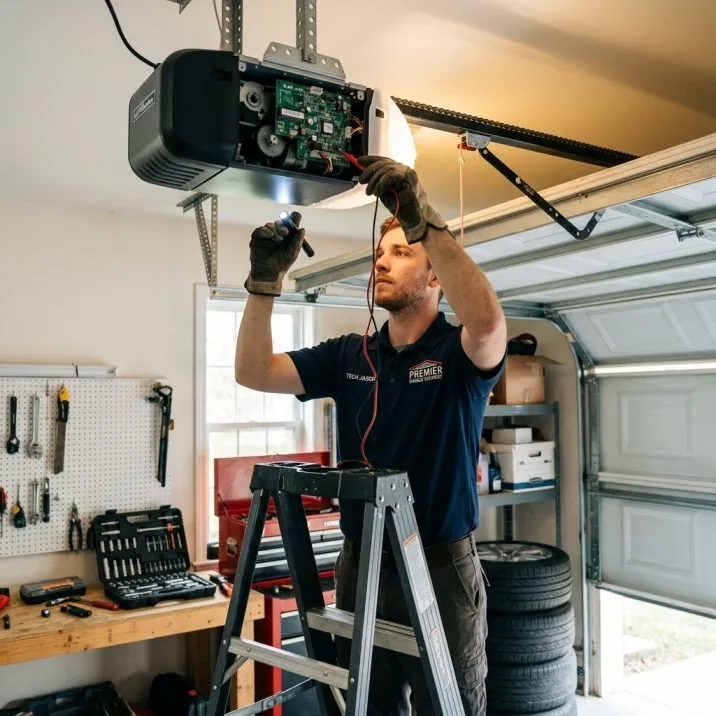
We Explain the Problem
You’ll know exactly which part failed and why, before any work begins.
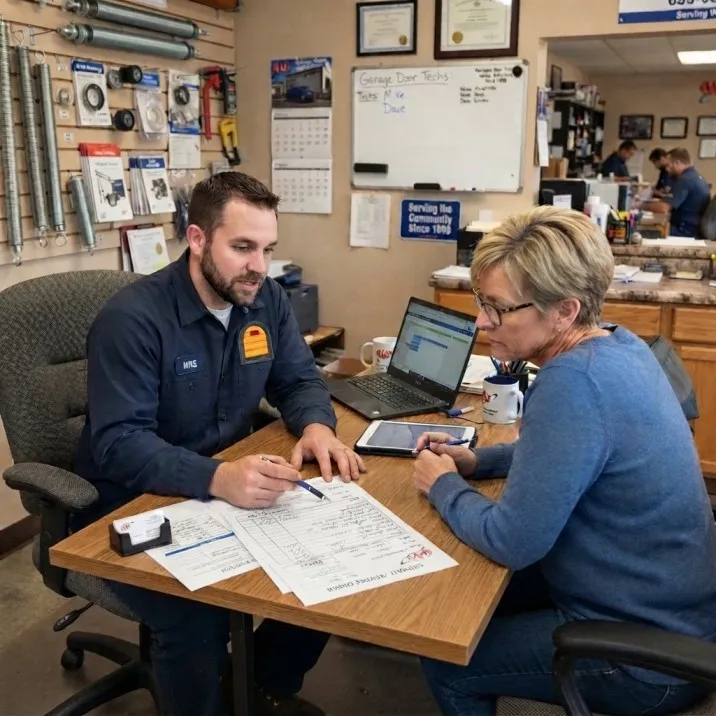
We explain the issue in plain language instead of expecting you to understand technical terms. If more than one component is involved, we explain how the parts relate to each other and what needs attention first.
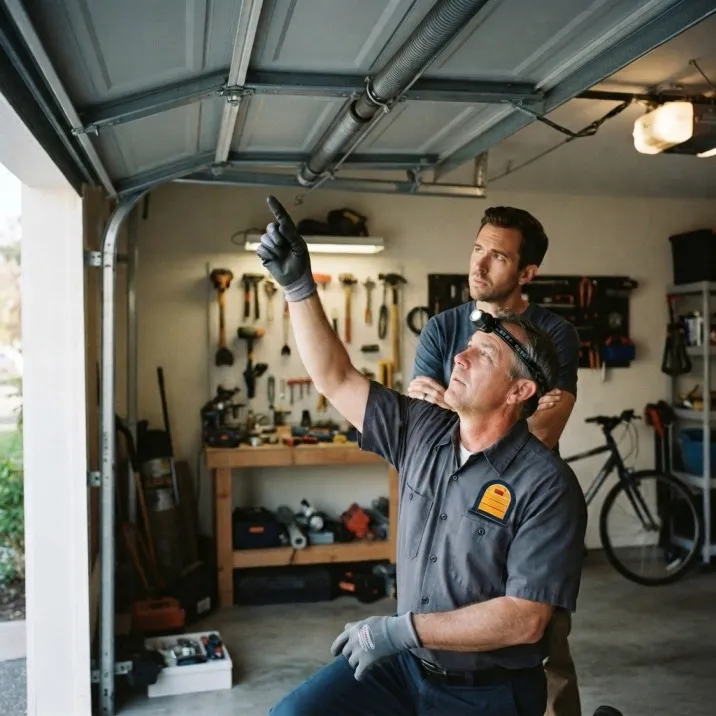
You Get a Written Estimate
Clear pricing tied to the actual repair — not a vague number that changes once the truck is in your driveway.
The estimate is based on the actual problem found during the inspection. You have the opportunity to understand the repair and approve the work before it begins.
We Complete the Repair
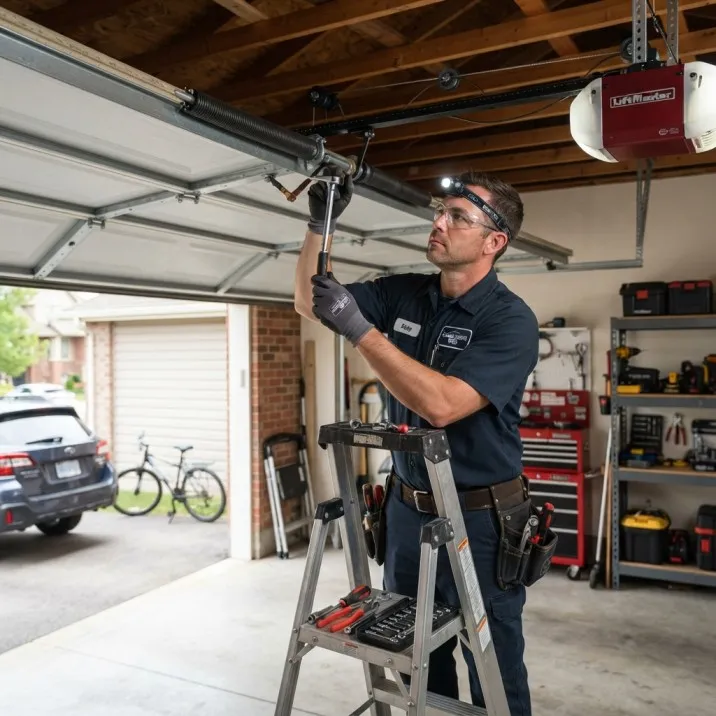
Using the right replacement parts for your door’s make and configuration.
Once the repair is approved, the failed component is repaired or replaced according to the requirements of the door system. The work should address the actual cause of the problem rather than simply covering up the symptom.
We Test the Door
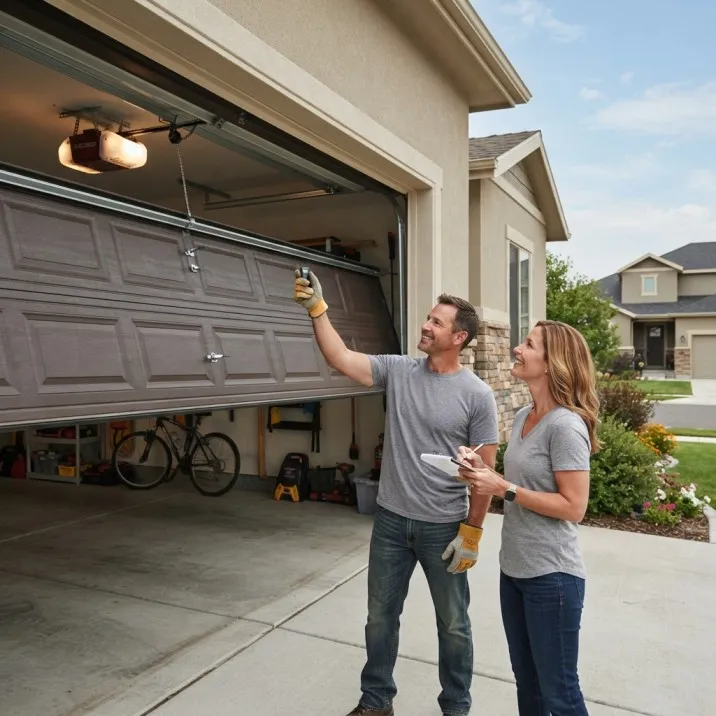
Full open-close cycle, opener function, and sensor check before we call the job done.
The repair is not finished simply because the replacement part is installed. The door needs to operate correctly as a complete system. We check its movement and relevant components before completing the visit.
No Surprise Invoices
You approve a flat-rate number before a single tool comes off the truck. Parts, labor, and testing are all in that one price.
Find the actual problem.
Show you what needs attention.
Give you the repair price.
You decide whether to proceed.
What We Check During a Garage Door Inspection
The visible problem is not always the source of the failure. A proper inspection considers the parts that work together to move and control the door.
Springs
Check the spring system and signs of failure or damage.
Cables
Check for snapped, loose, damaged, or displaced cables.
Rollers
Look for worn rollers that can affect smooth door movement.
Tracks
Check alignment, damage, and anything affecting the door’s path.
Opener
Check the opener and related components when automatic movement fails.
Safety Sensors
Check sensor position and operation when the door reverses or will not close.
Hinges & Hardware
Look for worn, loose, or damaged components affecting door movement.
Door Condition
Consider the overall condition of the door before recommending repair or replacement.
Repair or Replace? We Help You Make the Decision.
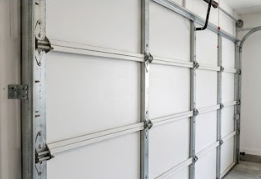
Repair is usually the right call when the door itself is structurally sound and only one component has failed. Replacement can make more sense when damage is spread across multiple major components, matching parts are difficult to find, repeat repairs have become common, or the door no longer insulates or seals properly.
If repair is the practical option, we will explain why. If replacement makes more sense for the long term, we will explain that too.
Talk About Your Garage DoorThe door is structurally sound and one component has failed.
Damage affects multiple major components or parts are difficult to source.
You get the information needed to make the decision.
Some Garage Door Repairs Should Not Be DIY Jobs
Garage door springs and cables can hold significant stored tension. A broken spring, damaged cable, or unstable door can also affect how the entire system moves.
If a spring has broken, a cable has snapped, or the door has come off its track, avoid forcing the door and have the system inspected by a qualified professional.

A Process Built Around Tuscaloosa Homeowners
Garage door service is local by nature. A technician needs to reach your property, inspect the actual door, identify the failed component, and complete the repair in person.
We serve homeowners throughout Tuscaloosa and surrounding areas, including Downtown Tuscaloosa, areas around The University of Alabama, Bryant-Denny Stadium, McFarland Boulevard, Paul W. Bryant Drive, the Black Warrior River corridor, and Northport.
Garage Door Repair Process FAQs
Here are some of the questions homeowners commonly have before scheduling a repair.
How long does a garage door repair take?
The time depends on the failed component and the condition of the door. Some single-part repairs can be completed during one service visit when the required part is available. More involved repairs may require additional time.
Will I know the price before the repair begins?
The process is designed around providing a clear estimate before work begins. The price should be tied to the actual repair identified during the inspection.
Do you inspect the entire garage door?
The inspection considers the components involved in the door’s movement and operation, including springs, cables, rollers, tracks, opener components, sensors, hinges, and related hardware.
What happens if my door needs more than one repair?
If multiple components are involved, the problem and the recommended work should be explained before the repair begins. This allows you to understand what needs attention and why.
Can you tell me whether I should repair or replace my garage door?
Yes. The condition of the door, extent of damage, availability of replacement parts, repeat repairs, insulation, sealing, and the overall condition of the system can all affect that decision.
Know What Happens Before the Repair Starts.
Tell us what your garage door is doing. We will start with the problem, inspect the system, explain what we find, and provide the next step.